Artificial intelligence is rapidly changing the way companies operate and interact with their customers. What was once considered an advanced technology available mainly to large technology firms is now becoming a practical business tool across many industries.
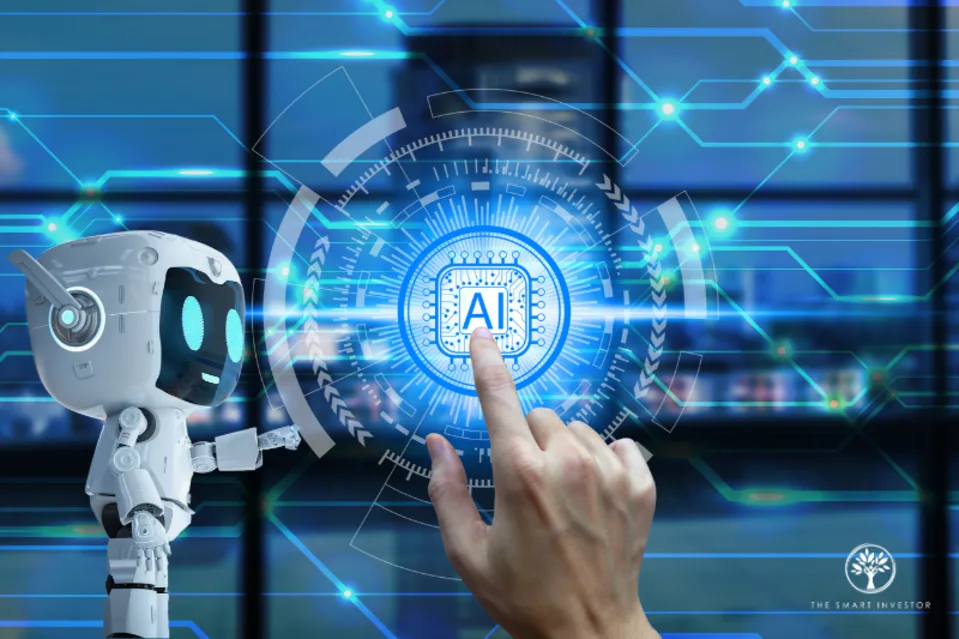
Companies are using artificial intelligence to answer customer questions, personalize experiences, analyze large amounts of data, automate repetitive tasks, improve marketing campaigns, and make faster business decisions.
The goal is not simply to replace human workers. In many cases, businesses use AI to support employees and allow them to focus on tasks that require creativity, communication, judgment, and problem-solving.
As AI technology continues to develop, companies that use it effectively can improve efficiency while creating faster and more convenient experiences for their customers.
1. Improving Customer Support
Customer service is one of the most common areas where companies use artificial intelligence.
AI-powered chatbots and virtual assistants can respond to frequently asked questions at any time of the day. Customers may ask about products, delivery times, account information, return policies, or basic technical problems and receive an immediate response.
This can reduce waiting times and allow human customer service representatives to focus on more complicated issues.
For example, a company may use an AI assistant to handle simple questions such as:
- What are your opening hours?
- How can I track my order?
- What payment methods do you accept?
- How can I reset my password?
- What is your return policy?
When a problem requires human judgment, the conversation can be transferred to a customer service employee.
This combination of AI and human support can create a faster and more flexible customer service system.
2. Personalizing Customer Experiences
Customers increasingly expect businesses to understand their interests and preferences.
Artificial intelligence can analyze customer interactions and identify patterns that help companies provide more relevant recommendations.
For example, an online store may analyze a customer’s previous purchases and browsing behavior to recommend products that may be relevant to them.
Streaming platforms can use similar technologies to suggest movies, shows, or music based on viewing and listening habits.
Personalization can make digital services easier to navigate because customers spend less time searching for products or content that match their interests.
However, companies must handle customer data responsibly and clearly communicate how personal information is collected and used.
3. Automating Repetitive Business Tasks
Many companies have employees who spend a significant amount of time performing repetitive activities.
AI can help automate parts of these workflows.
Examples include organizing information, categorizing customer inquiries, generating routine reports, processing documents, scheduling tasks, and preparing basic communications.
Automation does not necessarily mean eliminating the human role. Instead, employees can spend less time on repetitive administrative work and more time on tasks that require creativity or decision-making.
For a small business, saving even a few hours every week can make a meaningful difference in productivity.
4. Using AI to Understand Customer Feedback
Companies receive feedback through reviews, emails, surveys, social media comments, and customer support conversations.
Analyzing all this information manually can be difficult, especially for businesses with thousands of customers.
Artificial intelligence can help identify common themes and trends within large amounts of feedback.
For example, an AI system may identify that many customers are complaining about the same feature, delivery problem, or confusing part of a website.
Managers can then use these insights to determine which issues should be addressed first.
This allows companies to move beyond individual complaints and understand broader patterns in customer satisfaction.
5. Improving Marketing Campaigns
Marketing teams are also using AI to make campaigns more efficient.
Artificial intelligence can help companies generate content ideas, analyze customer behavior, segment audiences, and identify patterns in campaign performance.
For example, a business could use AI to develop several versions of an advertising message and then test which approach is most suitable for a particular audience.
AI can also assist with email marketing by helping companies organize customers according to their interests and previous interactions.
However, effective marketing still requires human creativity. AI can generate ideas and analyze information, but businesses need people to understand their brand, customers, and overall strategy.
6. Creating Faster and More Useful Search Experiences
Companies with large websites or online stores can use artificial intelligence to improve internal search.
Traditional search systems often depend on exact keywords. AI-powered search can understand the meaning behind a customer’s request more effectively.
For example, instead of searching for a specific product name, a customer might write:
“I need a lightweight laptop for university.”
An AI-powered system may understand that the customer is looking for a portable computer with suitable performance and battery life.
This can make it easier for customers to discover relevant products or information.
Better search experiences can also reduce frustration and increase the chances that visitors find what they need.
7. Detecting Fraud and Suspicious Activity
Financial institutions, online marketplaces, payment companies, and other businesses can use artificial intelligence to identify unusual patterns.
AI systems can analyze large numbers of transactions and detect activity that differs from normal behavior.
For example, an unusual transaction location, unexpected purchasing pattern, or rapid series of transactions may trigger additional security checks.
AI does not necessarily determine that a transaction is fraudulent on its own. Instead, it can help security teams identify activity that deserves further investigation.
This allows companies to respond to potential threats more quickly.
8. Improving Business Decisions
Businesses generate huge amounts of information every day.
Sales figures, customer interactions, website traffic, inventory levels, advertising results, and operational data can all provide useful insights.
Artificial intelligence can help analyze these datasets and identify patterns that may not be immediately obvious to humans.
For example, a retailer could use AI to identify which products are becoming more popular and adjust inventory accordingly.
A service company might analyze customer demand to determine when additional staff may be needed.
These insights can help businesses make decisions based on data rather than relying entirely on intuition.
9. Improving Products and Services
AI can also help companies understand how customers use their products.
By analyzing usage patterns, businesses can identify features that are popular and areas that may need improvement.
For example, a software company may discover that users frequently abandon a particular step during registration. This could indicate that the process is too complicated.
The company can then redesign the experience and measure whether the changes improve completion rates.
In this way, AI can contribute to continuous product improvement.
10. Supporting Employees
One of the most important applications of AI is helping employees work more efficiently.
An employee may use AI to summarize a long meeting, organize notes, draft an email, prepare a presentation, analyze information, or brainstorm ideas.
This can reduce the time spent on administrative tasks.
For example, a salesperson could use AI to summarize customer interactions before a meeting, while a marketing employee could use it to develop campaign ideas.
The human employee remains responsible for reviewing the information and making the final decisions.
Challenges Companies Must Consider
Although artificial intelligence offers many benefits, adopting it also creates challenges.
Companies need to think carefully about data privacy, cybersecurity, accuracy, transparency, and employee training.
AI systems can make mistakes, and automated decisions can sometimes produce unexpected results.
Businesses should therefore establish clear rules for how AI is used and determine which decisions require human review.
Employees also need training so they understand both the capabilities and limitations of AI tools.
The companies that benefit most from AI are not necessarily those that automate everything. They are often the ones that understand where AI can genuinely improve a process while maintaining appropriate human oversight.
The Future of AI in Business
Artificial intelligence is likely to become increasingly integrated into everyday business operations.
Customer service, marketing, logistics, finance, healthcare, education, retail, and many other industries are exploring new ways to use AI.
The technology may eventually become less visible to customers because it will operate behind the scenes.
For example, AI may help a company predict demand, personalize a website, detect security threats, organize customer requests, and optimize operations without the customer necessarily knowing which processes are powered by artificial intelligence.
This could make AI a standard part of business infrastructure rather than a separate technology.
Companies are using artificial intelligence in many different ways to improve the services they provide.
From faster customer support and personalized recommendations to automated workflows, smarter search, fraud detection, and data analysis, AI can help businesses become more efficient and responsive.
However, successful AI adoption is not simply about using the newest technology. Companies need to identify real problems, choose appropriate tools, protect customer data, and maintain human oversight where it matters.
When implemented responsibly, artificial intelligence can complement human expertise and help businesses deliver faster, more personalized, and more efficient services.
The future of business is unlikely to be about humans versus AI. Instead, it will increasingly involve people and intelligent tools working together to solve problems and create better experiences for customers.